7 Modern Nautical Outfit Ideas for Women: Sailor Dresses, Collar Blouses & Boat Shoes
This post contains affiliate links. As an Amazon Associate I earn from qualifying purchases.
Nautical style has a reputation for being easy to recognize—and surprisingly easy to overdo. Navy stripes, anchor motifs, gold buttons, sailor collars, and deck shoes can create a fresh coastal look, but wearing all of them at once can make an outfit feel more like a theme than personal style.
The modern approach is simpler. Start with one clearly nautical piece, then surround it with relaxed tailoring, natural textures, and accessories that feel current. A sailor-collar blouse can work with wide-leg trousers. A vintage-inspired sailor dress can feel effortless with a woven bag and understated shoes. Even classic boat shoes look fresh when paired with cropped denim or linen instead of a head-to-toe preppy uniform.
These seven modern nautical outfit ideas are designed for summer vacations, seaside lunches, warm-weather weekends, and everyday outfits that could use a polished coastal touch.
What Makes a Nautical Outfit Look Modern?
A modern nautical outfit suggests the coast without trying to reproduce a sailor uniform. The easiest way to find that balance is to use one recognizable maritime detail per look. That detail might be a wide sailor collar, a navy-and-cream palette, a Breton-inspired stripe, or a pair of leather boat shoes.
Keep the rest of the outfit restrained. Warm white, cream, sand, chambray blue, and cognac brown soften traditional navy and red. Relaxed linen, lightweight knits, denim, raffia, and woven textures also make structured nautical details feel more natural.
A useful rule is to choose no more than three main colors. Navy, cream, and tan create a quieter look than navy, bright white, red, and gold used together. If a garment already has statement buttons, contrast trim, or an oversized collar, let that feature do the work.
1. Give a Sailor Dress a Relaxed Vacation Feel
A sailor dress already provides the shape, color story, and defining detail of the outfit, so it needs very little help. Instead of adding more maritime symbols, style it with simple pieces that make it feel like a summer dress you happen to love.
Choose flat leather sandals, low espadrilles, or clean minimal sneakers depending on the setting. A small woven bag adds texture without competing with the collar or contrast trim. For jewelry, try small gold hoops, pearl studs, or a slim bracelet rather than a collection of themed charms.
Fit also determines whether the look feels modern. A softly defined waist or an easy A-line silhouette usually feels more wearable than a very rigid, uniform-like shape. If the dress has a dramatic collar, keep the neckline clear and wear hair loosely tied back or tucked behind the ears.
This outfit works well for a coastal lunch, a resort afternoon, a summer date, or sightseeing in a seaside town. The goal is not to disguise the dress’s vintage character—it is to give that character enough breathing room.
Check the latest price on Amazon
2. Style a Sailor-Collar Blouse with Tailored Separates
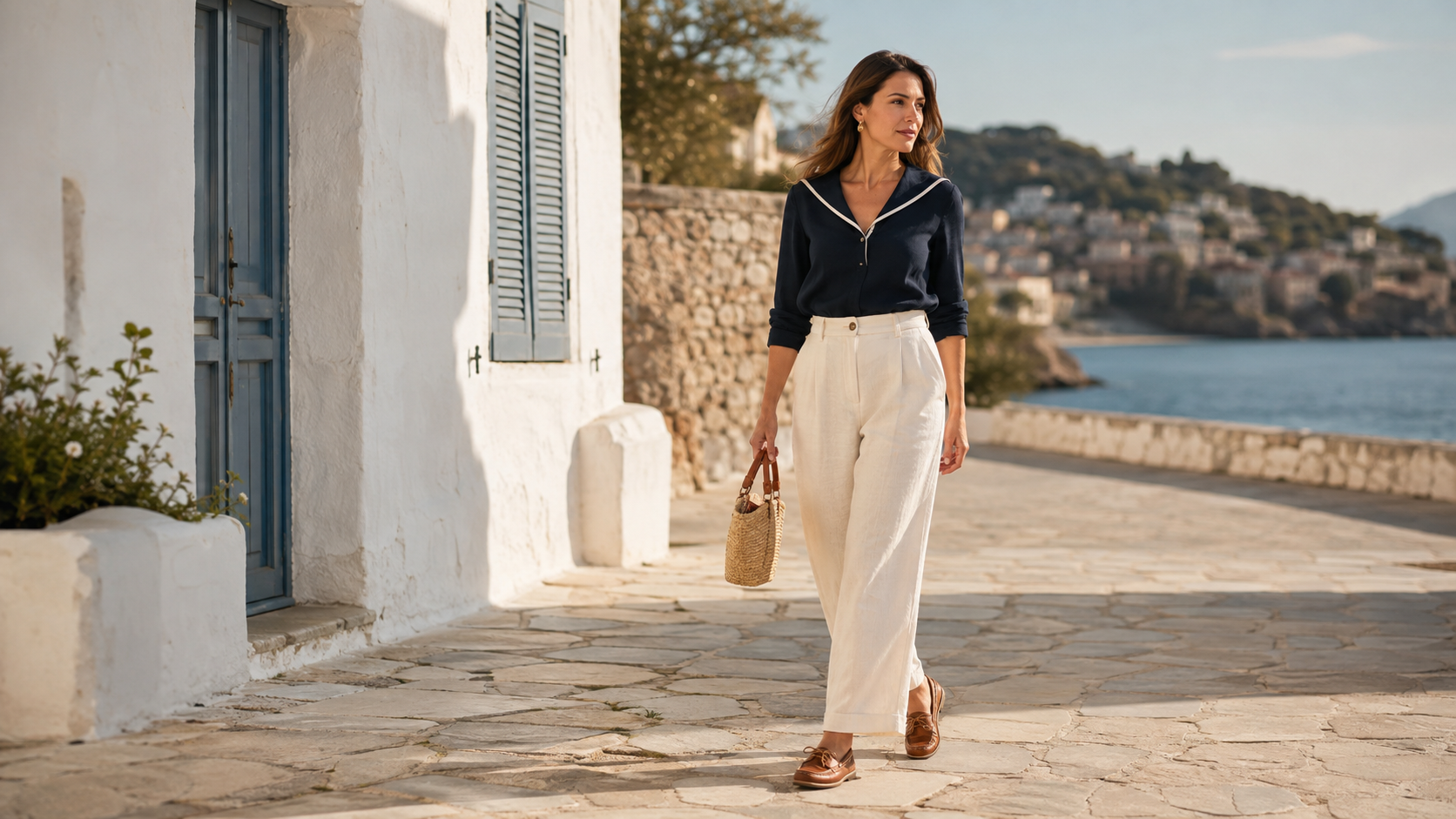
A sailor-collar blouse is one of the easiest nautical pieces to mix into an existing wardrobe because it can replace an ordinary white or navy top. The collar creates the visual interest; the trousers or shorts make the outfit feel contemporary.
For a light summer combination, pair the blouse with cream wide-leg trousers and tan sandals. For a more casual version, use dark-wash straight-leg jeans with a front tuck and a simple leather belt. High-waisted tailored shorts also work, especially when their hemline is clean and their shape is not overly tight.
Because the collar occupies the neckline, skip a large necklace. Small earrings, a watch, or a slim cuff will look more balanced. If the blouse has navy piping or decorative buttons, repeat only one of those tones elsewhere—perhaps in a bag or shoe—rather than matching every detail.
The quickest styling adjustment is a partial or full tuck. It defines the waist, balances the width of the collar, and prevents the blouse from overwhelming the rest of the outfit. Roll the sleeves once if the fabric allows; that small touch can make a polished blouse feel more relaxed.
Check the latest price on Amazon
3. Pair a Polo Knit with High-Waisted Shorts
Nautical style does not require stripes or a sailor collar. A fine-gauge polo knit in navy, cream, or soft blue can create a subtler version of the look, especially when paired with high-waisted shorts.
Try a navy polo with ivory shorts for crisp contrast, or reverse the palette with a cream knit and navy bottoms. A brown leather belt and understated gold earrings add warmth. Loafers, boat shoes, or streamlined sandals can finish the outfit, but avoid adding several strongly preppy accessories at once.
The knit should skim the body rather than pull tightly, while the shorts should have enough structure to hold a clean shape. A slightly longer inseam often makes this combination feel polished and versatile. If you prefer more coverage, the same formula works with cropped trousers or a simple A-line midi skirt.
This look sits comfortably between sporty and refined. It is practical for a casual brunch, a marina walk, or a warm travel day, yet it still looks intentional in photographs. Add sunglasses and a compact shoulder bag, and the outfit leans toward Riviera-inspired prep without becoming overly formal.
Check the latest price on Amazon
4. Modernize Classic Leather Boat Shoes
Boat shoes are practical-looking, low-profile, and unmistakably coastal. They can also feel dated when every other element of the outfit is equally traditional. The solution is contrast: wear them with clean, relaxed pieces instead of building a complete prep-school look around them.
Pair tan or dark-brown boat shoes with cropped straight-leg jeans and an oversized linen shirt. With tailored shorts, add a simple ribbed tank or relaxed button-down rather than a fitted polo and blazer. Cream linen trousers are another natural match, particularly with a soft blue shirt or navy lightweight knit.
The trouser length matters. A cropped hem or a small ankle break keeps the shoes visible and makes the silhouette feel deliberate. No-show socks can preserve the low-cut appearance while providing more comfort. If you prefer visible socks, choose a different shoe; traditional crew socks tend to fight the proportions of this style.
Keep the leather tone connected to one other element, such as a belt or bag, but do not worry about an exact color match. Slight variation usually looks more relaxed. The result should feel like an everyday outfit suited to the coast—not a uniform assembled for a yacht club.
Check the latest price on Amazon
5. Use Stripes as an Accent, Not the Entire Theme
Stripes are the fastest route to nautical style, which is precisely why they benefit from restraint. A striped knit, cardigan, or T-shirt should usually be the only patterned piece in the outfit.
Start with a navy-and-cream striped top and pair it with solid wide-leg trousers, straight jeans, or an uncluttered midi skirt. If the stripe is bold, keep the bag and shoes quiet. If it is fine and subtle, one stronger accessory—such as a muted red flat or structured navy bag—can add definition.
Red works best as punctuation rather than a third competing theme. A narrow belt, lipstick, scarf detail, or small bag is enough. Avoid combining stripes, anchor prints, rope jewelry, and multiple gold-buttoned pieces in one look. Each item may be attractive on its own, but together they leave no clear focal point.
For a softer palette, replace bright white with oatmeal or ecru and choose washed navy instead of a highly saturated blue. This small shift makes stripes easier to wear beyond peak summer and helps them blend with denim, camel, olive, and other wardrobe neutrals.
6. Build a Polished Look Around a Navy Blazer
A navy blazer can anchor a coastal outfit without looking overtly nautical. The key is to keep the layers underneath light and the lower half relaxed.
For warm weather, wear it over a white tank or silk-look camisole with cream linen trousers. A navy blazer also works with tailored white shorts and flat leather sandals for an outfit that can move from daytime sightseeing to an early dinner. Push or loosely roll the sleeves to reduce the office-like formality.
Gold-tone buttons can add maritime character, but they already function as jewelry. Pair them with small earrings and a simple bag rather than another statement accessory. If the blazer is sharply tailored, balance it with a soft fabric below. If it is oversized and relaxed, create shape with a tucked top or defined waistband.
This formula is especially useful when a vacation itinerary includes places with air-conditioning, evening breezes, or a dressier reservation. The blazer provides a practical layer, while the cream-and-navy palette keeps the outfit connected to the rest of a coastal wardrobe.
7. Finish with Riviera-Inspired Accessories
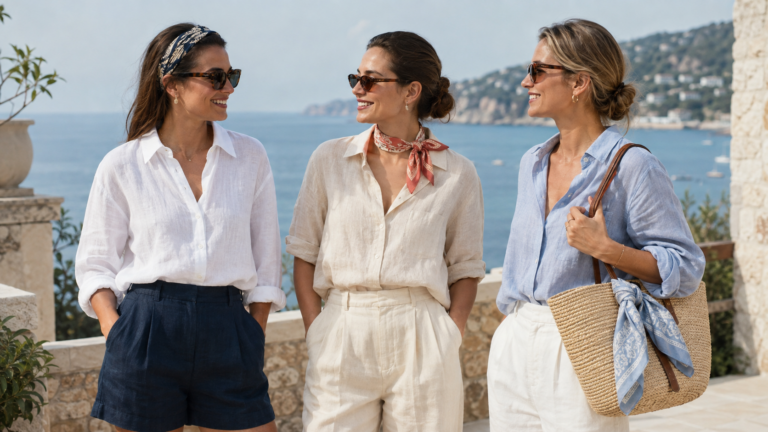
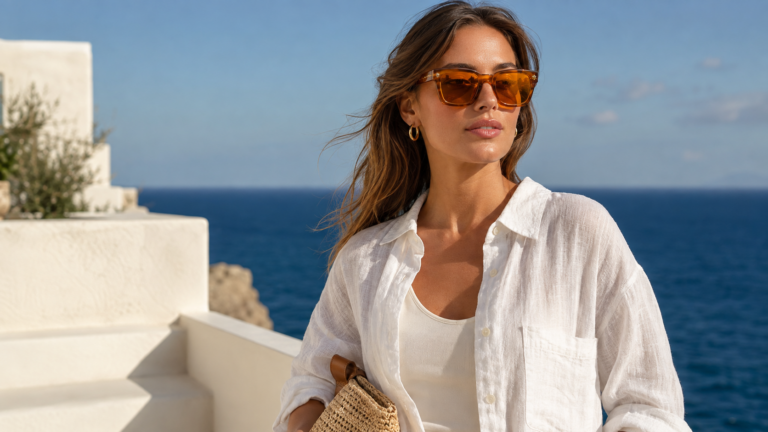
Accessories can turn familiar basics into a nautical outfit without requiring a themed garment. Amber-tinted sunglasses bring warmth to navy, white, and denim. A bandana or silk-look scarf can be tied at the neck, around a low ponytail, or on the handle of a structured bag. Woven handbags, simple gold earrings, raffia belts, and leather shoes add texture that feels at home near the water.
Choose one accessory as the focal point and let the others support it. If you wear a scarf at the neck, select small earrings. If your sunglasses have a bold retro frame, keep the scarf in the bag or use it as a subtle handle detail. A woven tote looks relaxed during the day; a compact leather or raffia bag makes the same clothing feel more polished at dinner.
Accessories are also the lowest-commitment way to test the aesthetic. Start with clothes you already own—a white shirt, navy trousers, or a cream dress—then add one coastal detail. If the result feels natural, you can build from there rather than buying an entirely separate vacation wardrobe.
A Simple Modern Nautical Color Palette
Navy and white may be the classic pairing, but they are not the only option. Softer neutrals make nautical pieces easier to repeat and less likely to feel costume-like.
Try one of these three-color combinations:
- Navy, warm white, and cognac brown
- Cream, chambray blue, and antique gold
- White, soft navy, and muted red
- Sand, sea blue, and amber
Use the first two colors across the clothing and reserve the third for shoes, a belt, jewelry, or a bag. Natural textures such as linen, cotton, woven straw, and leather add depth even when the palette is minimal.
How to Keep Nautical Style from Looking Costume-Like
Before leaving the house, look for one clear focal point. If the sailor collar is the first thing you notice, the outfit probably does not need anchor earrings. If the striped cardigan and gold-buttoned blazer are competing for attention, remove one. Editing is what makes the theme feel intentional.
Keep these guidelines in mind:
- Wear one obvious nautical element at a time.
- Mix navy with cream, tan, denim, or sand instead of relying only on bright white and red.
- Balance structured details with relaxed fabrics and modern trouser shapes.
- Treat gold buttons, stripes, and oversized collars as statement features.
- Use maritime motifs sparingly—or skip them entirely.
- Choose shoes and bags that suit the occasion, not just the theme.
- Repeat colors loosely rather than matching every item exactly.
Most importantly, make sure the outfit still feels like something you would wear away from the coast. The strongest nautical wardrobes are built from versatile pieces, not one-use costumes.
Final Thoughts
Modern nautical style is less about collecting anchors and stripes and more about creating a clean, confident balance. One sailor-inspired detail, a restrained coastal palette, and a few relaxed textures are enough to establish the mood.
If you are new to the look, begin with a sailor-collar blouse or classic boat shoes. Both can work with denim, linen, tailored shorts, and other pieces already in your closet. If you enjoy a stronger vintage statement, let a sailor dress take center stage and keep everything around it simple.
Start with one nautical piece you can wear beyond vacation season, then build the rest of the outfit from familiar basics. The result will feel coastal, polished, and personal—without drifting into costume territory.