Mediterranean Summer Tablescape: Lemon, Olive & Terracotta Ideas
This post contains affiliate links. As an Amazon Associate I earn from qualifying purchases.
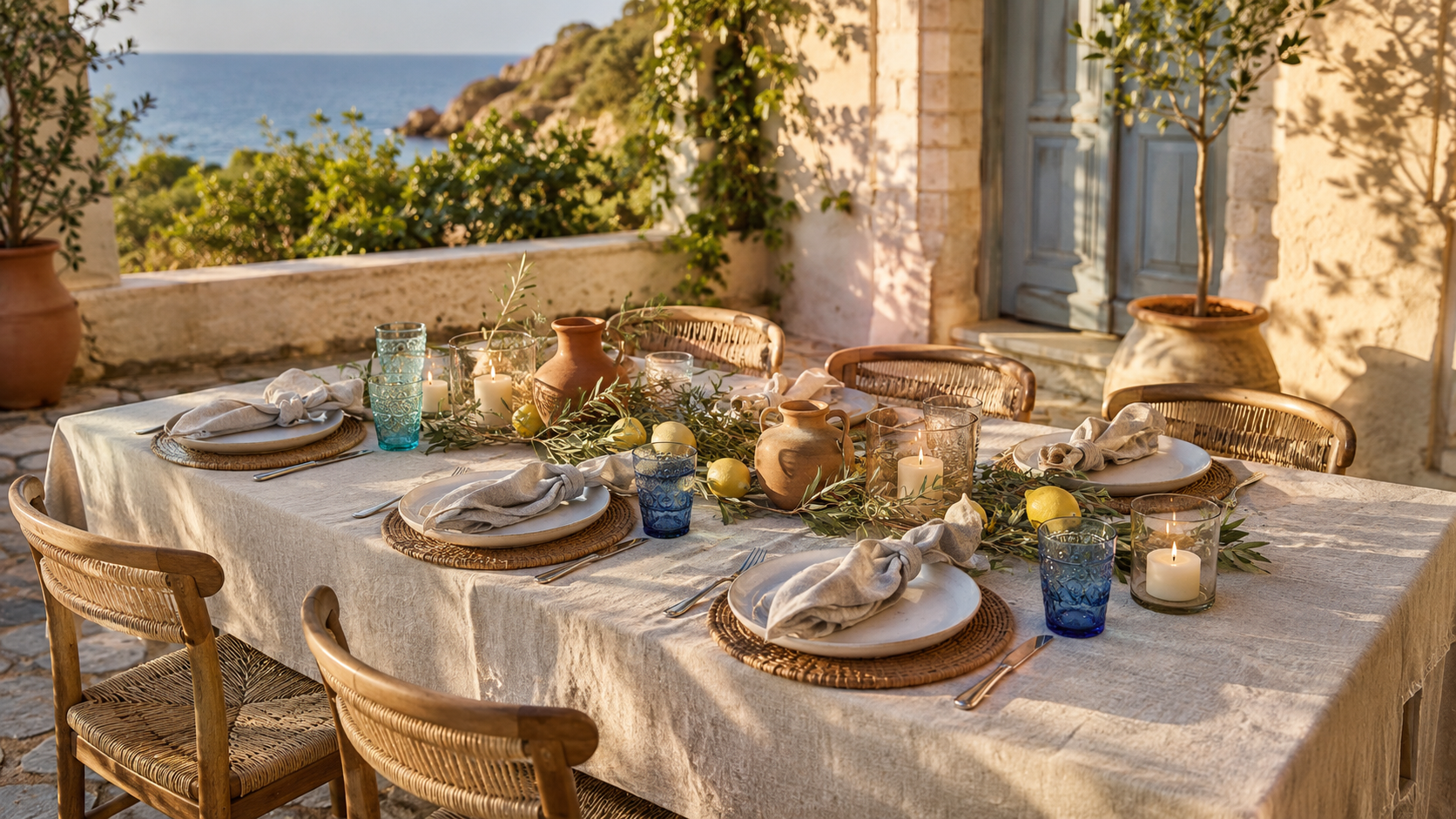
A Mediterranean summer tablescape should feel sun-warmed, relaxed, and welcoming—not as though every detail was arranged with a ruler. The most memorable tables borrow their beauty from the landscape: citrus picked at its brightest, silvery olive leaves, weathered terracotta, clear blue glass, and linen softened by use.
That combination works especially well for an outdoor dinner, a garden lunch, or an unhurried gathering on the patio. Better still, you do not need an entirely new set of dishes to create it. A few well-chosen textures and colors can give simple white dinnerware a distinctly Mediterranean mood.
The key is restraint. Let natural materials lead, repeat each accent just enough to make the table feel connected, and leave room for food and conversation. Here is how to build the look one layer at a time.
Start with a Relaxed Linen Tablecloth
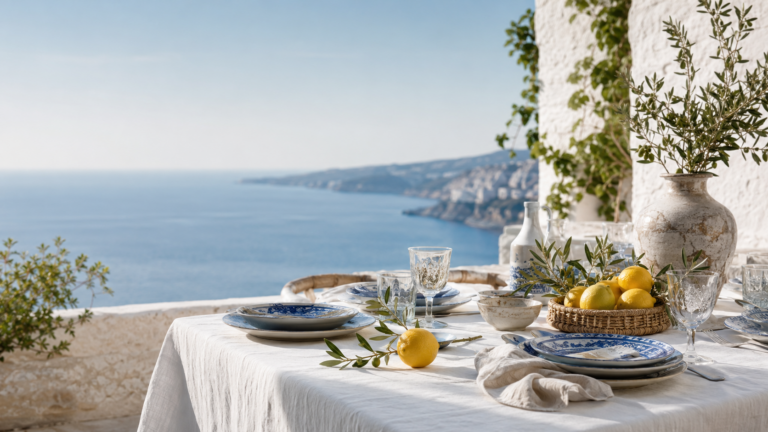
Begin with a neutral foundation in warm white, oatmeal, sand, or pale flax. Linen is ideal because its visible weave and gentle creases make the table feel inviting rather than formal. A linen-blend cloth can create a similar effect while often being easier to care for.
Avoid a sharply pressed, brilliant-white tablecloth if you want a relaxed Riviera atmosphere. Instead, allow the fabric to drape naturally over the edges. If your table has an attractive wood or stone surface, you can also use a narrow runner and leave part of the tabletop exposed.
The cloth should support the setting, not become its main feature. Solid, quiet colors give lemons, olive leaves, blue glass, and terracotta enough visual space to stand out.
Use Fresh Lemons as the Main Color Accent
Fresh lemons are one of the simplest ways to introduce Mediterranean color. Their saturated yellow brings energy to a neutral table, and their natural variation keeps the arrangement from looking overly styled.
Place several lemons loosely along the center rather than building one large, formal display. A few can sit in a shallow ceramic bowl, while others can be tucked between olive branches or placed near serving dishes. Odd-numbered clusters—such as groups of three or five—usually feel more natural than symmetrical rows.
Keep the rest of the palette controlled. When yellow is the brightest color on the table, it has much more impact. You can repeat it subtly in a lemon garnish, a small place card illustration, or a bowl of citrus near the drinks station, but there is no need to add lemon prints to every surface.
After the gathering, move the fruit back to the kitchen and use it for cooking or drinks. The centerpiece is decorative without becoming disposable décor.
Layer Olive Branches Down the Center
Olive branches add the soft green-gray tone that balances bright citrus and warm terracotta. Their narrow leaves feel airy, so they can fill the center of a table without creating the visual weight of a dense floral arrangement.
Lay short branches in a loose, interrupted line. Let some point toward one end of the table and others turn in the opposite direction. This creates movement and looks more organic than a perfectly continuous garland. Leave small gaps for lemons, candles, and serving bowls.
Most importantly, keep the greenery low enough for guests to see one another. For a dinner table, conversation matters more than centerpiece height. If fresh olive branches are not practical, use realistic faux stems sparingly and mix them with real lemons to retain a natural impression.
For more low-profile arrangements using fruit, ceramics, and greenery, see these easy Mediterranean centerpiece ideas for everyday tables.
Add Warmth with Terracotta Accents
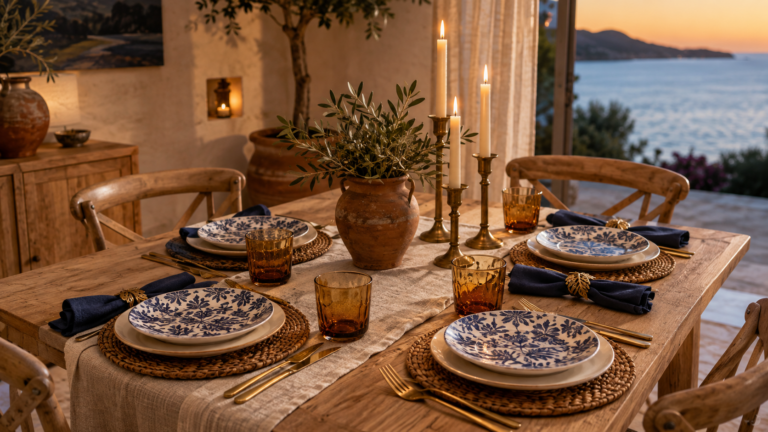
Terracotta brings an earthy, sunbaked warmth that prevents blue and white from feeling too crisp. You only need a few pieces: a small vase, a low bowl, a candle cup, or a miniature planter can be enough.
Distribute two or three terracotta accents along the table instead of grouping them all in one place. Slight variations in tone and shape make the setting feel collected over time. Look for matte or gently weathered finishes rather than glossy orange surfaces, which can appear visually loud beside natural linen.
There is also no need to make terracotta dinnerware part of every place setting. Used as a small repeating accent, it adds warmth while allowing your existing white plates to remain the practical base.
A small weathered terracotta vase can hold a few olive stems without turning the arrangement into a tall centerpiece. Its compact scale also makes it easier to repeat the warm clay tone elsewhere on the table.
Mix White Plates with Blue Glassware
Simple white plates are remarkably useful in a Mediterranean setting. They create breathing room among the stronger colors and allow the food to become part of the design. Stack a dinner plate with a smaller salad plate only if both will be used; unnecessary layers can make a casual summer table feel fussy.
Add blue, aqua, or sea-glass-colored tumblers for contrast. Textured glass catches late-afternoon light beautifully and introduces color without requiring patterned plates. Choose one shade for a calm, edited look, or mix closely related blues if you prefer a more collected table.
Clear wineglasses can sit beside colored water glasses without creating clutter. If you are serving several beverages, distinguish each glass by shape or height rather than adding too many colors.
If you are building your tableware gradually, this guide to Mediterranean table essentials for effortless everyday hosting explains which foundational pieces are most versatile.
Blue hobnail drinking glasses add both color and texture while still working with simple white dinnerware. The embossed surface catches the light, making them especially effective for an outdoor table in the late afternoon or early evening.
Bring in Texture with Rattan Placemats
Round rattan, seagrass, or woven-fiber placemats add definition to each place setting and connect the table to an outdoor environment. Their warm, natural color sits comfortably between pale linen and terracotta.
Choose mats slightly larger than your dinner plates so that a visible woven border remains. Before buying a set, check both the diameter and the number of mats included; product photos can make size and quantity surprisingly easy to misread.
Woven placemats are most effective when the rest of the setting remains relatively simple. Avoid combining them with a heavily patterned cloth, ornate chargers, and multiple printed napkins. One strong texture is enough.
Fold plain linen or cotton napkins loosely beside the plates or place them beneath the forks. Warm white, muted blue, sage, or sand will complement the palette without competing with the lemons.
A set of round woven placemats made from natural water hyacinth is an easy way to add warmth and definition without introducing another pattern. A six-piece set also works naturally with the full-table layout shown in this guide.
Finish with Soft Candlelight
As daylight fades, candlelight gives terracotta and glass a warmer, more dimensional appearance. Use several low candles rather than one tall centerpiece. Small votives, short tapers, or compact lanterns can create an even glow while preserving clear sightlines.
For an outdoor table, consider wind before choosing holders. Glass-sided lanterns or hurricane-style covers provide more protection than exposed flames. Keep candles away from loose linen, dry leaves, and overhanging branches, and never leave a flame unattended.
Flameless candles are a sensible alternative in a windy location or where open flames are restricted. Select warm-white versions with a subtle flicker; a cool, bright LED can flatten the soft evening atmosphere you have created.
Keep the Food Simple—and Let It Join the Décor
Mediterranean-inspired food naturally supports this tablescape because its colors and textures already suit the palette. A platter of tomatoes and mozzarella, a bowl of olives, crusty bread on a wooden board, roasted vegetables, pasta, or a generous green salad can all become part of the visual composition.
Serve food in white ceramics, clear glass, olive wood, or restrained terracotta pieces. A few larger serving dishes usually look more generous and organized than many small bowls scattered between place settings.
Do not fill every inch of the table before guests arrive. Leave a clear path for shared dishes and allow enough room around each plate for comfortable dining. If the table is small, place drinks, extra bread, and dessert on a nearby console or side table.
For a casual gathering, family-style serving reinforces the easy, communal mood. The goal is not to reproduce a restaurant table—it is to create a setting where people want to linger.
A Simple Mediterranean Tablescape Shopping List
Before buying anything, take inventory of what you already own. White plates, plain flatware, neutral napkins, and clear glassware can all work. Then add only the elements that will make the strongest visual difference.
- Neutral linen or linen-blend tablecloth
- Rattan, seagrass, or other woven placemats
- Simple white dinner plates
- Blue or aqua drinking glasses
- Two or three small terracotta vessels
- Fresh or realistic faux olive branches
- Fresh lemons
- Low candleholders or outdoor lanterns
- Plain cloth napkins
- White ceramic or wood serving pieces
The most useful purchases are the ones that can appear in other settings. Woven placemats also suit coastal and rustic tables, blue glasses work throughout summer, and small terracotta vessels can move to a kitchen shelf or windowsill after dinner.
If you are starting from scratch, prioritize the placemats and colored glasses before decorative extras. They shape every place setting, photograph clearly, and can transform everyday white dishes without requiring a full dinnerware replacement.
Final Thoughts
A beautiful Mediterranean summer tablescape is less about matching pieces and more about creating rhythm: pale linen beneath warm woven texture, white ceramics beside blue glass, vivid lemons softened by olive leaves, and small terracotta accents repeated along the table.
Keep the arrangement low, give each material room to be noticed, and resist the urge to decorate every open space. A little irregularity makes the table feel personal and lived-in—the very quality that gives Mediterranean entertaining its charm.
Whether you are hosting a garden lunch, an outdoor dinner, or a simple meal with friends, begin with what you have and add just a few natural details. For a broader guide to arranging each place and balancing the complete table, visit how to set a beautiful Mediterranean-inspired table for everyday gatherings.
Then bring out the food, light the candles, and let the evening become the most memorable part of the setting.