Mediterranean Thanksgiving Tablescape Ideas for an Elegant Holiday
This post contains affiliate links. As an Amazon Associate I earn from qualifying purchases.
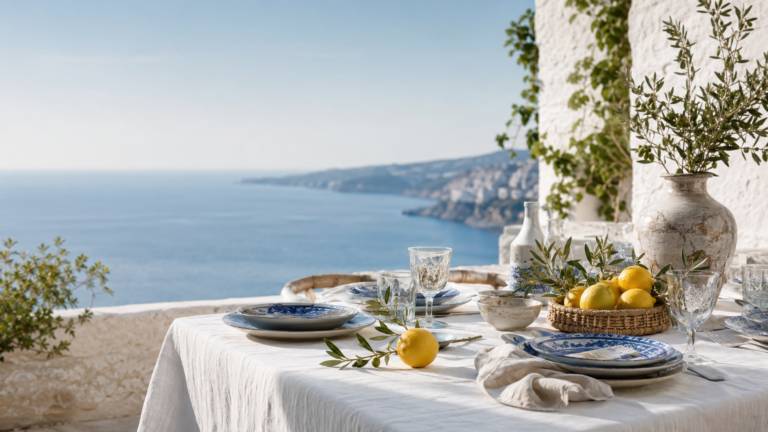
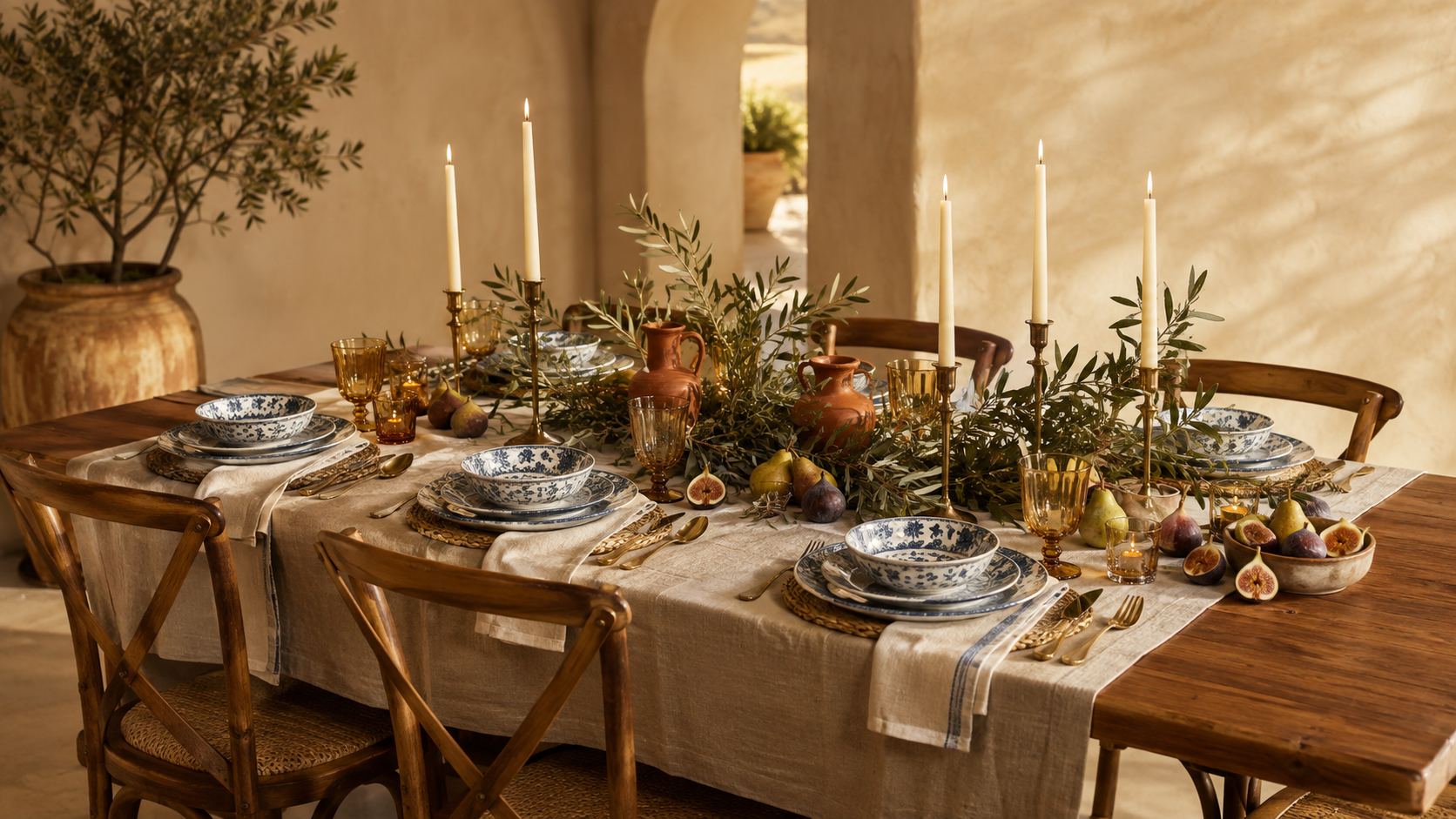
Thanksgiving tables do not have to be covered in bright orange leaves and miniature pumpkins to feel warm and seasonal. A Mediterranean-inspired setting offers a quieter, more collected alternative: sun-washed linen, blue-and-white ceramics, olive branches, aged brass, amber glass, and candlelight.
The look feels special enough for a holiday, yet relaxed enough for guests to settle in and stay awhile. It also works beautifully with pieces you may already use throughout the year. The key is to layer natural textures and autumn warmth around a light Mediterranean foundation—not to turn the table into a themed display.
Below are nine practical ideas for creating an elegant Mediterranean Thanksgiving tablescape that feels welcoming, distinctive, and easy to personalize.
Build a Warm Mediterranean Color Palette
Begin with a restrained palette rather than a long list of seasonal decorations. Warm ivory, oatmeal, faded blue, olive green, terracotta, and amber create a natural bridge between Mediterranean style and late autumn.
Let ivory and linen tones cover most of the table. Use blue in smaller, repeated accents—perhaps on plates, napkins, or glasses—then introduce warmth through brass candlesticks, rust-colored fruit, amber glass, or a terracotta vessel.
This balance matters. Too much blue can make the table feel cool and summery, while too much orange can overpower the Mediterranean character. A useful visual ratio is approximately 60% warm neutrals, 25% blue and green, and 15% amber, brass, or terracotta accents. It is a styling guide rather than a strict formula, but it helps the table remain calm and cohesive.
Start with a Relaxed, Textured Foundation
A natural cotton runner or linen tablecloth gives the setting immediate softness. Choose oatmeal, flax, warm ivory, or a subtle woven texture instead of stark white. A slightly relaxed finish is part of the appeal; the fabric should look tactile and inviting rather than sharply pressed and formal.
For a wood table, a runner may be enough. Leaving some of the surface visible adds warmth and keeps the arrangement from feeling overly dressed. On a pale or painted table, a full linen cloth creates a gentler foundation for patterned dinnerware.
If you use placemats, keep them simple. Woven seagrass, braided jute, or softly textured neutral mats work well, but avoid combining a busy runner, highly patterned plates, and heavily woven placemats all at once. One strong texture per layer is usually enough.
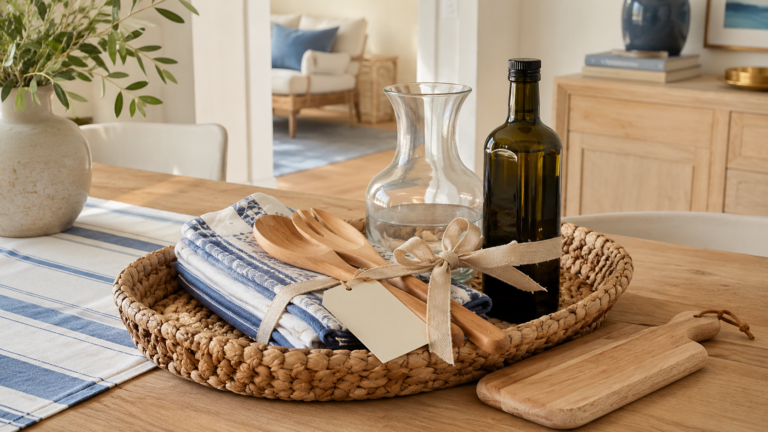
DII Natural Chambray Table RunnerThis 100% cotton runner adds a soft, neutral layer while leaving the warmth of a wood table visible. Its natural chambray texture works especially well beneath blue-and-white dinnerware and relaxed Mediterranean accents.Check the latest price on Amazon.
Check the latest price on Amazon.
Layer Blue-and-White Dinnerware with Simple Basics
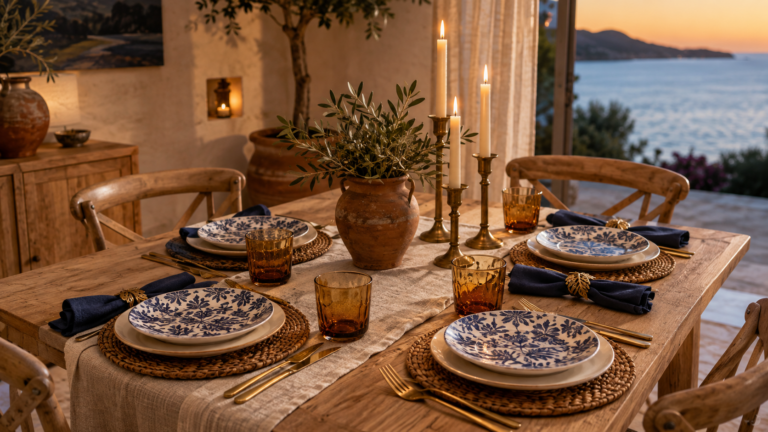
Blue-and-white dinnerware is the most recognizable Mediterranean note in this tablescape, but a complete matching set is not necessary. In fact, the table often looks more personal when patterned salad plates are layered over simple white dinner plates.
Try one of these combinations:
White dinner plate + blue patterned salad plate
Blue-rimmed dinner plate + cream side plate
Plain stoneware + a small hand-painted bowl
Repeat the blue at each place setting so the table reads as intentional. The patterns do not need to match perfectly, but they should share a similar scale or color family. Cobalt, indigo, and muted Aegean blue all work; choose one dominant blue and let the others appear only as minor variations.
Keep flatware understated. Brushed brass adds warmth, while classic stainless steel prevents the table from becoming too ornate. Either can work well—the important point is consistency across every setting.
Check the latest price on Amazon.
Use Olive Branches Instead of Typical Fall Foliage
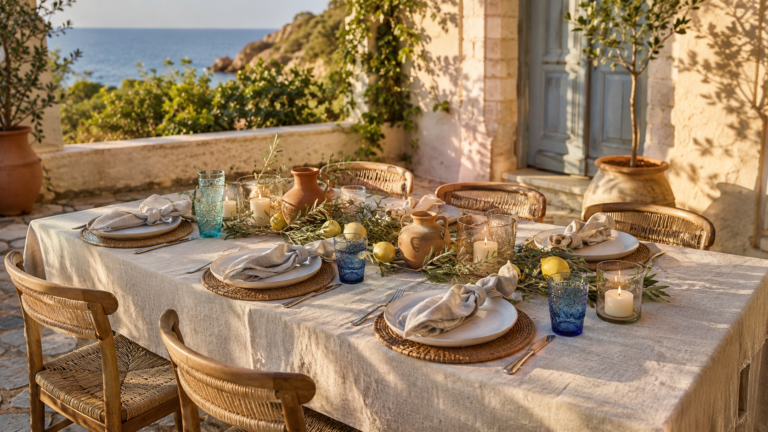
Olive branches bring soft gray-green color and unmistakable Mediterranean character without adding visual weight. Arrange them loosely down the center of the table, tuck a short sprig beside each napkin, or place several branches in a low ceramic vessel.
Fresh branches are lovely when available, but high-quality faux stems are more practical for decorating ahead of time. If you use faux greenery, bend the stems into slightly irregular shapes and avoid perfectly symmetrical placement. Real branches rarely sit like obedient little soldiers, and artificial ones should not either.
For more seasonal depth, mix olive leaves with one or two understated autumn elements: small pears, dark grapes, fresh figs, pomegranates, or dried seed heads. The arrangement should still look airy. Greenery that spreads horizontally is preferable to a tall bouquet that blocks conversation.
Add Terracotta and Amber Accents
Terracotta and amber provide the warmth that makes the table feel appropriate for Thanksgiving. Use them in small, deliberate doses rather than repeating them everywhere.
A low terracotta bowl can hold pears or pomegranates. Amber tumblers can sit beside clear wine glasses. A rust-colored linen napkin can add warmth to an otherwise blue-and-white place setting. Even a few brown glass bud vases can shift the mood from coastal summer to late autumn.
Choose two warm accents and repeat each one at least twice. For example, pair an amber glass vessel with amber water glasses, or echo a terracotta centerpiece with muted rust napkins. Repetition creates cohesion without requiring a matching collection.
Create a Low, Edible-Looking Centerpiece
The best Thanksgiving centerpiece leaves room for serving dishes and allows guests to see one another. Instead of one large floral arrangement, create a low composition that runs along the center of the table.
Start with olive branches, then add clusters of pears, figs, grapes, or pomegranates. Place a small ceramic or terracotta vessel off-center and fill it with loose greenery. A few bud vases can extend the arrangement without making it feel crowded.
Keep loose decorative produce separate from food that will actually be served, and wash any fresh fruit before placing it on the table. If space is limited, style the centerpiece for guests’ arrival, then remove one or two elements when the main dishes appear. A beautiful table should still function once dinner begins.
Mix Brass Candleholders with Clear Glass
Candlelight gives the table its holiday atmosphere. Slender taper candles in aged or brushed brass holders add height without creating a visual wall. Clear glass votives fill the lower spaces and reflect light across the table.
Warm ivory, beeswax, or muted taupe candles suit this palette better than bright white. Use unscented candles near food so fragrance does not compete with dinner. Keep flames well away from greenery, fabric, paper place cards, and serving traffic; flameless tapers are a sensible option for crowded tables or homes with children and pets.
Vary the height slightly, but keep the overall arrangement below eye level when guests are seated. Odd-numbered groups—three or five candleholders—often look natural, especially when they are spaced among greenery rather than lined up in a perfect row.
Check the latest price on Amazon.
Finish Each Place Setting with a Natural Detail
Small details make individual place settings feel considered. Fold a linen napkin loosely and finish it with an olive sprig, a handwritten name card, or a short piece of natural twine. A single bay leaf or small rosemary sprig can also work, provided it is clean and kept away from candle flames.
Avoid elaborate napkin sculptures. The Mediterranean mood is more relaxed than ceremonial, and a simple fold lets the fabric texture show. Place the napkin on the plate for a layered look or to the left of the setting when patterned dinnerware deserves the spotlight.
For place cards, warm white deckled paper or plain cream cardstock is enough. Handwriting adds personality, but a small serif font can create a more polished appearance if you prefer to print them.
Leave Space for Thanksgiving Dinner
It is easy to style a beautiful empty table and forget what happens when platters, bowls, glasses, and guests arrive. Before finishing, decide whether food will be served family-style, from a sideboard, or plated in the kitchen.
For family-style service, keep the center sparse and place most decorative elements between the spaces reserved for serving dishes. For buffet-style service, the center can be fuller, but guests still need clear room for water glasses, wine glasses, bread plates, and shared condiments.
Sit in one of the chairs before guests arrive. Check the sight line, reach, candle placement, and distance between settings. If the table feels crowded from the chair, remove something. Editing is what makes an abundant table feel elegant rather than busy.
A Simple Shopping List
Ready to recreate the look? Shop the coordinated plates, linen, glassware, centerpiece pieces, and candlelight in our complete Mediterranean Thanksgiving table essentials guide.
You do not need to replace everything you own. Build the look around a few versatile pieces:
- Natural cotton runner or linen tablecloth
- White dinner plates
- Blue-and-white accent plates or bowls
- Linen napkins in ivory, olive, or muted rust
- Olive branches or realistic faux stems
- One low terracotta or ceramic vessel
- Amber glasses or small brown glass vases
- Brass taper candleholders
- Unscented warm-neutral candles
- Seasonal fruit for color and texture
Start with the neutral table textile, accent plates, and candleholders if you are buying new pieces. These three elements create the strongest visual change and can be reused for dinners well beyond Thanksgiving.
Frequently Asked Questions
Can blue work for a Thanksgiving table?
Yes. Blue feels seasonal when it is balanced with warm neutrals, olive green, amber glass, brass, wood, and terracotta. Keep the blue as an accent rather than the only color on the table.
How can I make the table feel autumnal without pumpkins?
Use late-season fruit, warm metals, brown or amber glass, textured linen, candlelight, and muted rust accents. Pears, figs, grapes, and pomegranates add harvest character without relying on traditional pumpkin decor.
Should every plate and glass match?
No. A shared color palette matters more than a perfectly matching set. Repeating one blue tone, one warm material, and one type of greenery is enough to connect collected pieces.
What centerpiece height works best for dinner?
Keep most of the arrangement low enough for seated guests to see across the table. Taller elements can work if they are narrow and spaced carefully, but serving access and conversation should come first.
Can this look work on a small table?
Yes. Use a narrow runner, one low vessel, two or three small candles, and a single patterned plate at each setting. Replace a continuous garland with a few short olive sprigs to preserve usable space.
Final Thoughts
A Mediterranean Thanksgiving table feels memorable because it steps away from expected holiday decorating without losing warmth. Natural linen keeps the foundation relaxed, blue-and-white ceramics provide character, and olive branches, amber glass, terracotta, and candlelight carry the setting into autumn.
Choose fewer elements, repeat them with intention, and leave enough space for the meal itself. The result will feel elegant but never stiff—a table designed not just to be photographed, but to welcome people in.
If you would like to use the same relaxed style throughout the year, explore How to Set a Beautiful Mediterranean-Inspired Table for Everyday Gatherings.