Coastal Christmas Decor Ideas That Feel Elegant, Not Beachy
This post contains affiliate links. As an Amazon Associate I earn from qualifying purchases.
Coastal Christmas decor can be beautiful without turning your home into a collection of seashells, anchors, and glittery starfish. The most elegant version is quieter. It borrows the coast’s color, light, and natural texture while allowing evergreen branches, candlelight, and traditional holiday shapes to keep the room unmistakably festive.
The result should feel like Christmas in a calm home near the water—not Christmas inside a beach souvenir shop. These coastal Christmas decor ideas focus on the decisions that create that balance: palette, greenery, texture, lighting, repetition, and restraint.
That distinction matters because a coastal room already has a strong visual language. Pale woods, woven fibers, warm whites, weathered blues, linen, and glass may be part of the space throughout the year. Holiday decorating works best when it builds on that foundation instead of covering it with a separate theme.
If your home needs a calmer year-round base first, start with these seven coastal home decor ideas. Then use the ideas below to add Christmas warmth without losing the collected, relaxed character you love.
Choose a Refined Coastal Christmas Color Palette
Begin with three color groups rather than buying decorations one item at a time.
First, choose a light neutral for the background: warm white, ivory, oatmeal, or pale sand. Second, select one coastal accent, such as deep navy, muted slate blue, faded denim, or a restrained sea-glass green. Third, add a warm finish through antique brass, aged gold, or soft champagne.
This palette feels coastal because it reflects water, sky, sand, and sunlight, but it does not need a single literal ocean motif. It also looks more sophisticated than using five or six equally strong holiday colors in the same room.
Deep navy is especially useful at Christmas. Against green branches, it looks rich rather than summery. Muted blue can soften a traditional tree, while warm metal prevents blue and white from becoming cold. If your home already contains blue upholstery or patterned ceramics, repeat that existing shade instead of introducing a new one.
Use red only if it belongs naturally in your home. A small amount of dark cranberry can warm a navy-and-ivory scheme, but bright red is not required for the room to feel festive.
Let Evergreen Greenery Carry the Holiday Story
The easiest way to keep coastal Christmas decor from feeling beachy is to let Christmas greenery remain the main seasonal element.
Use a full tree, a simple wreath, and one or two garlands as the visual framework. Cedar, pine, fir, juniper, eucalyptus, or convincing faux greenery all work. Their shapes give the room unmistakable holiday character, which means the coastal layer can remain subtle.
For a relaxed look, avoid making every garland perfectly symmetrical. Let a few branches extend beyond the mantel, mix two types of greenery, or allow a wreath ribbon to fall naturally. Coastal style benefits from softness and movement; tightly clipped arrangements can feel formal in the wrong way.
If you use faux greenery, choose pieces with variation in branch length and tone. One realistic garland styled carefully will usually look better than several thin garlands competing around the room. Add loose stems where fullness is needed instead of covering the greenery with more ornaments.
Decorate the Tree With Texture, Not a Theme
An elegant coastal Christmas tree should read as a beautiful Christmas tree first.
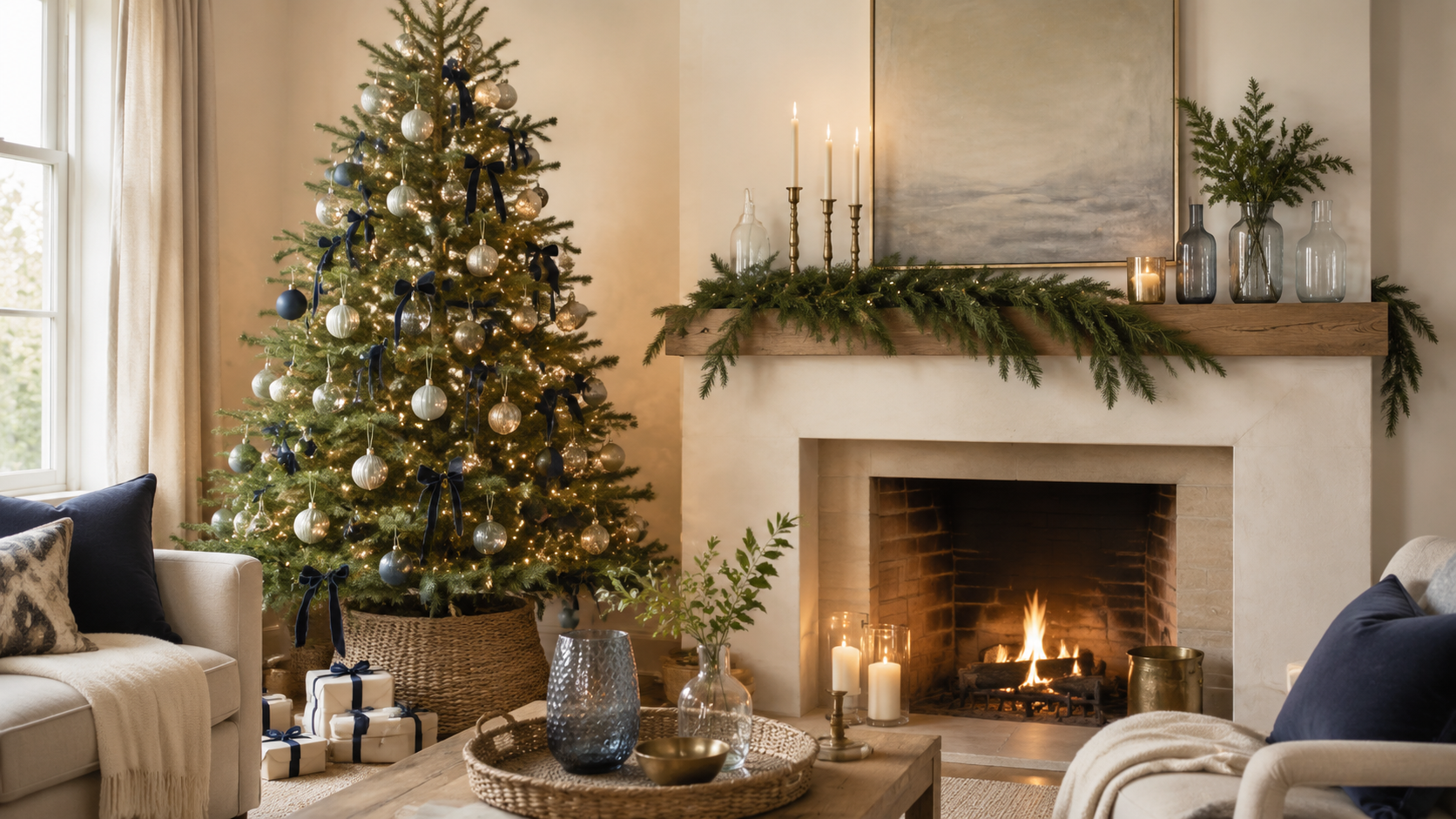
Start with warm white lights. Add ornaments in ivory, clear glass, smoky blue, aged silver, and muted gold. Vary the finishes: matte ceramic, softly reflective glass, velvet, paper, and unfinished or pale wood. A tree becomes interesting through contrast in texture, so it does not need novelty ornaments to hold attention.
Use fewer ornaments than you think you need, especially if the tree has a natural, open branch structure. Leaving small areas of visible greenery keeps the design relaxed and gives special pieces room to stand out.
If you own meaningful shells or seaside ornaments, you do not have to hide them. Choose one or two with personal value and treat them as collected objects rather than a decorating category. The room starts to feel themed when the same literal motif is repeated across the tree, mantel, table, pillows, and wrapping paper.
For a more polished finish, repeat each main ornament color at several heights. This moves the eye around the tree and prevents all the dark blue or metallic pieces from collecting in one area.
Use Blue Velvet Ribbon as a Quiet Coastal Accent
Ribbon is one of the simplest ways to introduce blue without replacing your entire ornament collection.
Choose velvet, washed linen, or a softly woven ribbon in navy, dusty blue, or blue-gray. Velvet adds depth against evergreen branches, while linen creates a lighter, more casual effect. Avoid shiny turquoise ribbon if your goal is timeless rather than tropical.
Instead of wrapping the tree in one continuous spiral, cut shorter lengths and tuck them between branches. This creates gentle movement and makes the ribbon look integrated rather than strapped around the tree. The same ribbon can appear again on the wreath, a few packages, or the backs of dining chairs.
Keep the repetition controlled. Two or three appearances are enough to connect the rooms. Matching every bow in the house can make the decorating feel staged rather than collected.
MEEDEE Navy Blue Velvet Wired Ribbon
This 1.5-inch wired velvet ribbon adds a polished navy accent to Christmas trees, wreaths, garlands, and wrapped gifts. The generous 25-yard spool makes it easy to repeat the same color throughout the room for a more cohesive holiday look.
Check the latest price on Amazon.
Add Natural Woven Materials in Small, Useful Places
Rattan, wicker, seagrass, jute, and pale wood can suggest the coast more gracefully than shells or rope knots. They also warm up the blue, white, and green palette.
The most effective place to use a woven material is often at the base of the tree. A natural tree collar visually anchors the greenery, hides the stand, and connects the holiday display to baskets or wood furniture already in the room. Choose a simple shape with a medium or fine weave; extremely rustic pieces can pull the design toward farmhouse rather than refined coastal style.
You can repeat the texture in one additional location—a woven tray on the coffee table, a basket holding spare throws, or small rattan bells tucked into a garland. Stop there. Natural texture is most elegant when it supports the room instead of becoming its own theme.
For a softer alternative, use an ivory knit or linen-blend tree skirt and place a lidded seagrass basket nearby. The principle is the same: bring in warmth and craftsmanship without adding another strong color.
ELYKEN 33-Inch Woven Christmas Tree Collar
This handwoven water-hyacinth tree collar adds natural texture while keeping the base of the tree neat and polished. Its warm neutral finish complements navy ribbon, soft white ornaments, and evergreen branches without making the room feel overly rustic. Measure your tree stand and check the product dimensions before ordering.
Check the current availability on Amazon.
Style the Mantel With Glass, Brass, and Greenery
A coastal Christmas mantel does not need a lineup of seaside figurines. Use a restrained mix of evergreen greenery, transparent glass, and warm metal instead.
Begin with a garland or several loose evergreen branches. Add two or three brass candlesticks at different heights, then balance them with clear or pale blue glass vessels. The glass reflects tree lights and recalls water without announcing a beach theme. A few matte ornaments placed low within the greenery can repeat the tree palette.
Keep the center of the mantel quieter if a wreath or artwork hangs above it. If the room already has a large mirror, let the reflected light become part of the display. There is no need to fill every inch of the surface.
Stockings should support the palette rather than become the loudest element. Ivory knit, oatmeal linen, or muted blue velvet all work. Hang them with simple metal hooks or narrow ribbon and avoid adding names, pom-poms, tassels, and large motifs all at once.
Create a Polished Coastal Christmas Entry
The entry should introduce the mood of the home in one clear gesture.
Use a simple evergreen wreath with a navy or slate-blue ribbon, then repeat one material just inside the door. That might be a woven umbrella basket, a pale wood console, or a clear glass lamp. Add a small bowl for keys, a pair of brass candlesticks, or a restrained arrangement of branches.
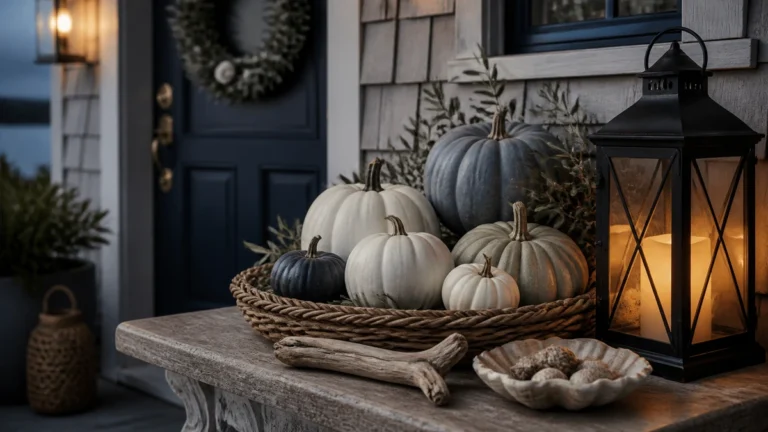
On a porch, lanterns and greenery are more elegant than a large collection of themed signs. If you want a stronger coastal clue, use a weathered wood bench or woven doormat—functional objects that belong naturally near the coast. Skip messages about sandy toes, flip-flops, or Santa at the beach. The architecture and materials can tell that story more quietly.
In a small entry, one wreath and one lit tabletop tree may be enough. Holiday decor looks intentional when every piece has breathing room.
Set an Elegant Blue-and-White Holiday Table
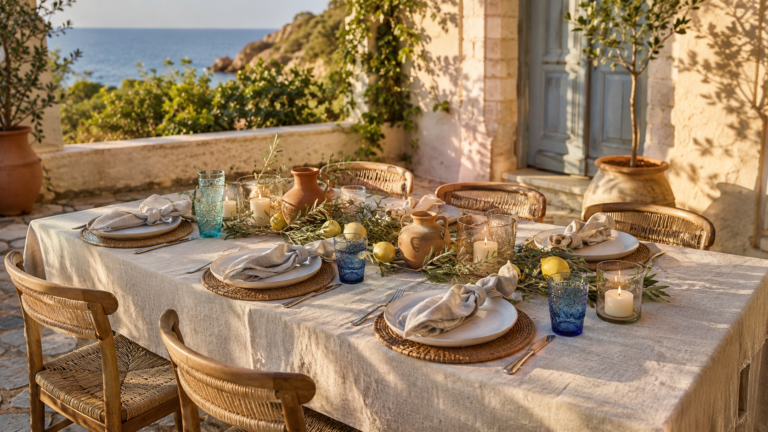
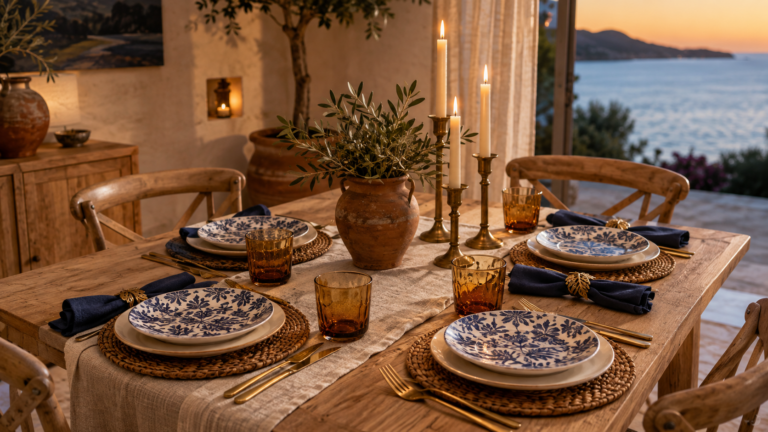
The Christmas table is a natural place to bring in blue and white because the color combination already feels classic in dinnerware.
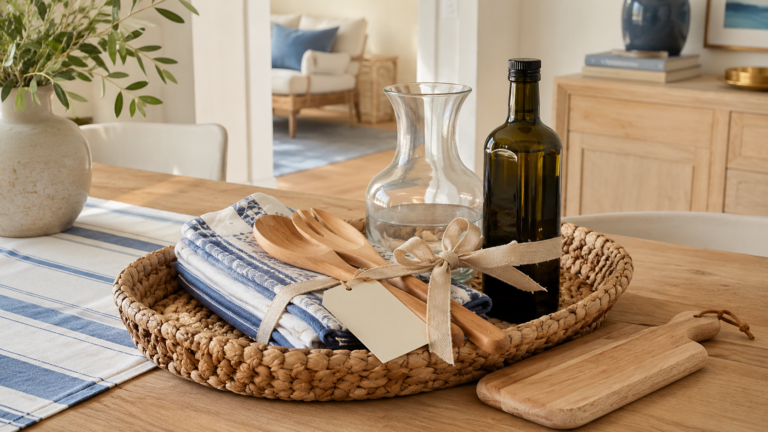
Start with a neutral tablecloth or runner. Layer plain white dinner plates with blue-patterned salad plates, then add clear glassware and simple cloth napkins. A narrow velvet ribbon around each napkin can repeat the tree without introducing novelty napkin rings.
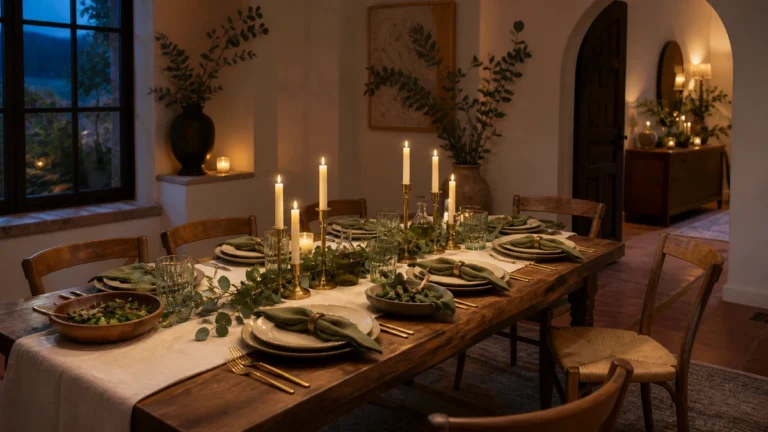
For the centerpiece, use low evergreen clippings, white flowers, or a few branches with blue-green foliage. Add warm candlelight in brass or clear glass holders. Keep the arrangement low enough for guests to see one another across the table.
If your dinnerware pattern is detailed, keep the centerpiece and linens simple. If your plates are plain, add texture through woven chargers or softly rumpled linen. The goal is balance, not a perfectly matched set.
This approach works because it combines a recognizable holiday foundation—greenery and candlelight—with coastal colors already suited to entertaining. It feels seasonal without requiring starfish at every place setting.
Use Warm Candlelight Instead of Adding More Color
Blue, white, glass, and silver can become visually cold after sunset. Warm light is what makes the palette feel welcoming.
Choose warm white tree lights rather than icy blue LEDs. Add taper candles to the dining table or mantel and place a few battery-operated candles inside glass hurricanes where an open flame would be impractical. Antique-brass holders provide a soft golden note even before the candles are lit.
Vary the height of the light sources but keep them out of sight lines and away from greenery, fabric, and drafts. Real candles require stable holders and active supervision; flameless candles are the safer choice for unattended displays, shelves, and homes with children or pets.
Romadedi Gold Candlestick Candle Holders
This set of two low-profile, brass-finish candleholders adds a warm antique-gold note to a mantel or dining table. Their compact height keeps the arrangement polished without blocking conversation or competing with evergreen greenery. Pair them with standard taper candles, place them on a stable surface, and keep open flames away from branches and fabric.
Check the latest price on Amazon.
Repeat Materials From Room to Room, Not Motifs
A cohesive holiday home does not require identical decorations in every space. It needs a short visual vocabulary.
Choose three or four recurring elements—for example, navy velvet, natural woven texture, clear glass, and antique brass. Use at least two of them in each main area while allowing the individual rooms to remain different.
The living room might combine velvet ribbon and brass candlesticks. The dining room might use blue napkins, clear glassware, and the same brass finish. The entry might repeat the ribbon on a wreath beside a woven basket. This creates continuity without making the home look like a retail display.
The same principle helps in a calm, collected coastal living room: a limited palette and repeated natural materials are more restful than many unrelated accents.
Before buying something new, ask which existing material or color it repeats. If the answer is none, the item may add clutter rather than cohesion.
Know What to Leave Out
Elegant decorating depends as much on editing as it does on adding.
You do not need to ban every seashell, coral shape, or piece of driftwood. You do need to avoid repeating literal seaside symbols until they dominate the holiday elements. One shell collected on a meaningful trip can feel personal. Twenty mass-produced shell ornaments can make the room feel themed.
Be equally selective with signs, slogans, glitter, nautical rope, bright aqua, and novelty Santas. If an object is competing with the tree, the greenery, and the people in the room, remove it for a day. You may find that the space feels calmer and more expensive without it.
A useful final edit is to photograph each room from the doorway. The camera makes clusters, empty spots, and color imbalance easier to see. Remove one item from any surface that feels busy, then check whether the remaining pieces have a clearer relationship.
A Simple Coastal Christmas Decorating Formula
If you want a quick plan, use this sequence:
- Keep the room’s warm white and natural base.
- Add evergreen greenery as the main holiday layer.
- Choose one coastal accent color, preferably navy or muted blue.
- Bring in one woven natural material.
- Add clear glass and a restrained warm-metal finish.
- Repeat those materials two or three times across the room.
- Remove most literal beach motifs.
- Finish with warm white light and candlelight.
This formula can be adapted to a large beach house, a suburban living room, or a small apartment. The number of decorations changes, but the balance remains the same.
Frequently Asked Questions
What colors work best for elegant coastal Christmas decor?
Warm white, ivory, navy, muted blue, evergreen, natural tan, and antique brass create a refined coastal holiday palette. Use one dominant neutral, one blue tone, and one warm metallic finish for the most cohesive result.
Can coastal Christmas decor include traditional red?
Yes. Deep cranberry or muted brick red can add warmth, especially in tartan, ribbon, or a small group of ornaments. Keep it secondary if you want the blue, natural texture, and light coastal feeling to remain dominant.
How can I make coastal Christmas decor feel festive without seashells?
Use evergreen wreaths and garlands, warm white lights, glass ornaments, velvet ribbon, woven natural materials, and candlelight. These elements create clear Christmas atmosphere while the palette and texture provide the coastal connection.
Is a flocked tree suitable for coastal Christmas style?
It can be, especially in a room with warm wood and natural woven accents. Choose light flocking rather than a heavily artificial white finish, and add warm lights and brass or wood details so the tree does not feel cold.
How do I keep blue-and-white Christmas decor from looking cold?
Add warm white lighting, evergreen branches, ivory textiles, pale wood, woven fibers, and antique brass. Mixing matte, soft, natural, and reflective textures also gives the palette more depth.
Final Thoughts
The most elegant coastal Christmas rooms do not rely on obvious beach decorations. They feel coastal through softened color, filtered light, woven texture, glass, and an easy sense of space. They feel like Christmas through greenery, ribbon, ornaments, and candlelight.
Keep those two roles clear and the decorating becomes much easier. Let the holiday elements lead, let the coastal details shape the mood, and stop before the room becomes a theme. The result will feel festive, personal, and calm enough to enjoy throughout the season.