7 Opera Aesthetic Dinner Party Ideas for a Dramatic Fall Evening
This post contains affiliate links. As an Amazon Associate I earn from qualifying purchases.
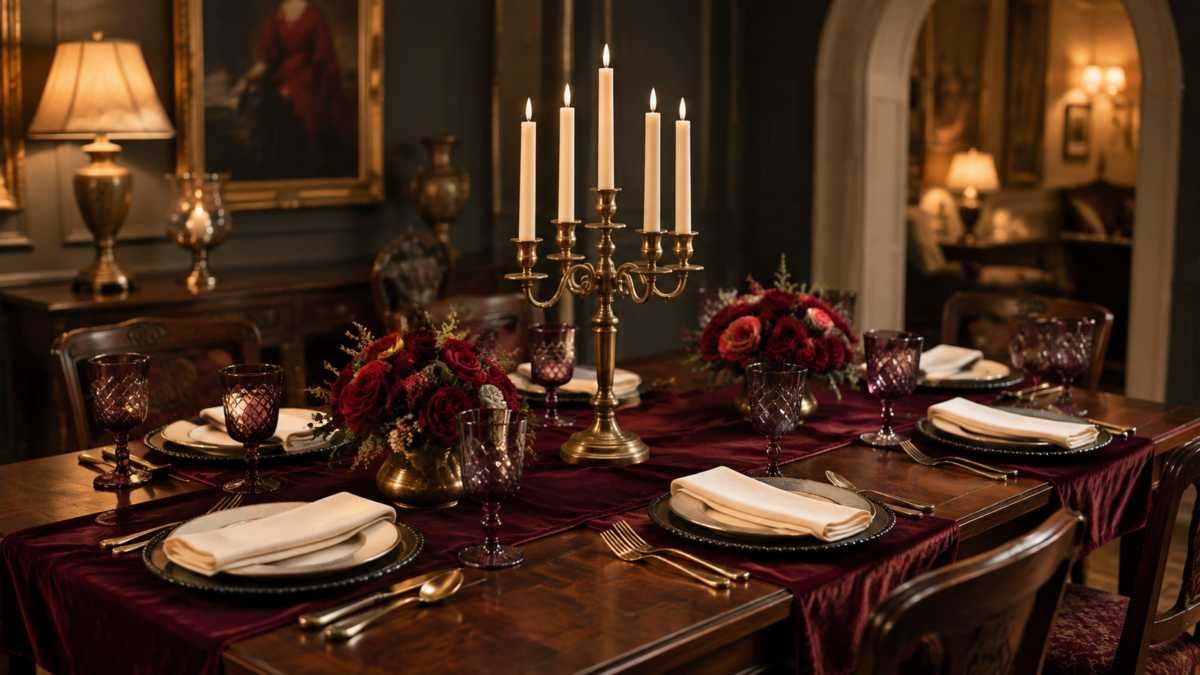
A burgundy runner, a branching candelabra, and six purple goblets can change the mood of a dining room before the first plate reaches the table. That is the appeal of an opera aesthetic dinner party: a few theatrical details do most of the work.
Pinterest’s 2026 Opera Aesthetic forecast points to dramatic drapery, red roses, opulent parties, and midnight-masquerade references. Fall is a natural fit. Burgundy, plum, black, and warm metal finishes already suit darker evenings.
The trick is knowing where to stop. A dining room needs clear sightlines, space for serving dishes, and lighting that lets guests read the menu. Use the theater as a mood reference—not as a reason to cover every surface with props. The seven ideas below build the look in practical layers.
1. Begin With a Burgundy Velvet Foundation
Start with one piece of burgundy velvet running down the center of the table. Its color recalls a theater curtain without requiring literal opera-themed décor, and its low sheen looks rich under warm evening light.
On a wood or black table, skip the full tablecloth and let some of the surface show. On a pale table, add black chargers or dark napkins to give the runner more definition. A slight drop at each end looks relaxed; fabric pooling on the floor does not. Measure the table first and keep the ends away from guests’ feet.
Limit the supporting palette to cream, black, and an antique-brass tone. That leaves room for one plum-colored accent later instead of turning every item burgundy.
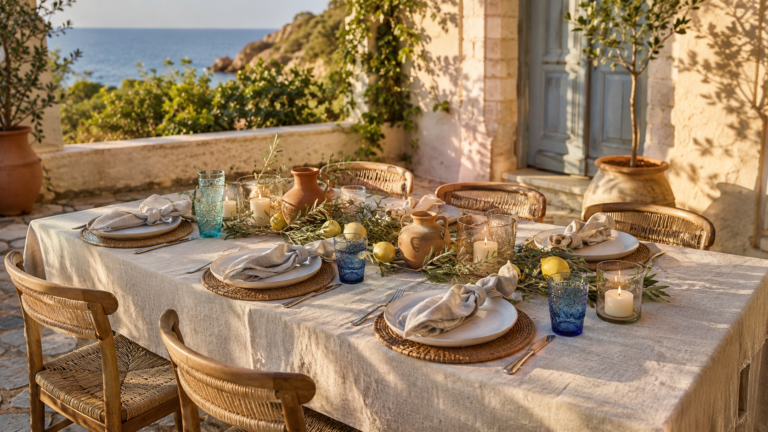
For another warm-climate-inspired approach to layered linens and relaxed place settings, see our guide to a beautiful Mediterranean-inspired table.
BTF HOME Burgundy Velvet Table Runner
This solid burgundy velvet runner measures 20 by 120 inches. The length can suit a long dining or banquet table, but check your tabletop dimensions and preferred end drop before ordering.
Check the latest price on Amazon.
2. Build a Candlelit Opera-House Centerpiece
Rather than scattering small candleholders across the table, give one five-arm candelabra the central role. Its branching shape provides height and a clear focal point, much like a chandelier viewed from a theater balcony.
Set it in the middle of a long table, or just off center with a low flower arrangement on the other side. Do not repeat the shape with more tall objects. Guests should still be able to see each other. A small brass-tone detail at each place setting is enough to carry the finish down the table.
Test the candles in the holders before the party; a loose taper can lean as it burns. More importantly, style around the flame rather than placing the flame wherever the photograph looks best. The U.S. Fire Administration recommends stable holders, at least 12 inches of clearance from anything that can burn, and extinguishing candles whenever you leave the room. If the runner, roses, menus, or hanging fabric fall within that space, use flameless tapers instead.
Viscacha 5-Arm Candelabra
This brass-tone metal candelabra has five arms. According to the listing, its holders accommodate candles approximately 0.5 to 1 inch in diameter; confirm the fit of your tapers before lighting them.
Check the latest price on Amazon.
3. Serve Drinks in Jewel-Toned Vintage-Style Glassware
Purple goblets introduce color at every seat without adding another layer of fabric. They also stay visible in dim light, unlike clear glasses that can disappear against cream plates and pale napkins.
Use one colored goblet per guest for water, wine, or a zero-proof drink. If the table already includes clear wine glasses, place the purple goblets beside them rather than replacing the whole set. The slight mismatch feels collected, which suits the old-world mood.
Let purple remain a small accent. Matching it with purple plates, napkins, candles, and flowers would flatten the palette instead of deepening it. Wash and inspect each glass before setting the table, following the maker’s care instructions.
Yungala Purple Wine Glasses, Set of 6
This set includes six purple vintage-style glass goblets with a 10-fluid-ounce capacity each. The Amazon listing identifies the material as glass and describes the goblets as dishwasher-safe.
Check the latest price on Amazon.
4. Arrange Red Roses Like a Stage Detail
A towering rose arrangement belongs in the lobby, not between two people trying to talk over dinner. Divide deep red roses among two or three short vessels instead. The repeated color runs along the table, while the low height keeps conversation easy.
Deep red, garnet, and near-black roses work with burgundy velvet without matching it exactly. For a more autumnal arrangement, add a small amount of dark foliage, burgundy mums, chocolate cosmos, or dried seed heads—whatever is locally available and appropriate for indoor use.
Trim away leaves below the waterline and arrange the flowers before placing candles. Loose petals should stay away from food and flame. If the center already feels full, move one vase to the bar or dessert table. Editing is part of decorating.
5. Layer Black, Cream, and Antique-Gold Place Settings
Bring the opera-house contrast to each seat: a black or charcoal charger, a simple cream dinner plate, and one muted gold detail. The pale plate gives the food a clean background, while the dark outer layer connects it to the room.
Plain everyday dishes are useful here. They calm the more decorative pieces and prevent the setting from looking like a themed rental package. Fold a burgundy or ivory napkin simply; an elaborate fan fold would compete with the glassware and centerpiece.
Only set utensils the menu requires, and preserve a landing space for shared dishes. A formal-looking table can still feel easy to use. If you are building an entertaining collection gradually, our guide to 10 Mediterranean table essentials focuses on versatile pieces rather than one-night novelty décor.
6. Add One Restrained Masquerade Detail
One masquerade reference is intriguing. Ten look like party-store inventory.
Choose a single cue: black place cards shaped like opera tickets, a cream menu tied with narrow burgundy ribbon, or one decorative mask on the bar cart. Masks should be optional unless the invitation clearly says otherwise. Guests may enjoy the atmosphere without wanting to wear part of the décor.
A printed menu can carry the idea quietly. Label the courses “Act I,” “Act II,” and “Finale,” using a readable serif typeface on warm-white paper. Keep the type large enough to read in low light.
Place cards can also start a conversation. Add one question beneath each name, such as “What song deserves a grand entrance?” The theatrical detail then has a purpose beyond the photograph.
7. Complete the Evening With Lighting, Music, and a Fall Menu
The table will not feel atmospheric under a bright ceiling light. Turn it down and use lamps or flameless candles around the room to create smaller pools of warm light. Never place fabric over a lamp or fixture. Curtain-like panels belong on correctly installed hardware, safely away from heat and flame.
Music matters, but it should not make guests raise their voices. Start with piano, strings, or an opera overture at low volume. Save a more dramatic track for the move to dessert rather than scoring every minute of dinner.
The menu can follow the same three-act idea without creating three evenings of work for the host:
- Act I: Pear crostini, spiced nuts, or a small cheese board
- Act II: Red-wine braised beef, mushroom ragù, or roasted squash with polenta
- Finale: Dark chocolate tart, poached pears, or individual espresso desserts
Choose a main dish that can be prepared mostly in advance. Plate one course in the kitchen, serve another family-style, and have dessert ready before the doorbell rings. The host should not spend the evening backstage.
A blackberry spritz, pomegranate mocktail, or red wine can echo the table colors. Label alcoholic and zero-proof choices clearly, and keep water within reach at every place.
Before guests arrive, take one photograph from the doorway. The camera will reveal crowded areas quickly. Remove an extra vase, prop, or stack of plates if the table has lost its shape.
Opera Aesthetic Dinner Party FAQs
Do guests need to dress for the theme?
No. “Cocktail attire; burgundy, black, or jewel tones welcome” gives useful direction without turning the invitation into a costume assignment. State clearly if masks are optional.
Can this look work on a small dining table?
Yes. Use a narrow runner, one compact candle arrangement, and one colored glass at each place. Replace multiple flower vessels with a single low arrangement, then move the mask or framed menu to a nearby console.
How can I create the mood without open-flame candles?
Use flameless tapers in stable holders, dim the overhead light, and switch on warm lamps around the room. Several low light sources create more atmosphere than one visible flame.
What can I reuse after the party?
The velvet runner can return for Thanksgiving or winter holidays. The candelabra can move to an entry table, while colored goblets work for anniversaries, wine nights, and other fall gatherings. Pieces with a second use are better buys than literal opera props.
When should I start planning a fall dinner party?
Set the date and guest list three to four weeks ahead, especially during the holiday season. Finalize the menu about a week before. The nonperishable parts of the table can be arranged a day or two in advance, with fresh flowers and candles added later.
Final Thoughts
Set the runner first, add the candelabra, and place the goblets. Then pause. If the table already feels dramatic, the roses and paper details can stay restrained.
An opera aesthetic dinner works when guests notice the mood without having to navigate around it. Keep the flowers low, the lighting safe, and the menu manageable. Once those practical choices are settled, press play on the overture and enjoy the evening from the table—not the kitchen.